Halifax Influencer Passive Income Scheme CIFAS Marker Removal
Influencer passive income scheme, Misuse of Facility marker filed by Halifax. Removed in 4 weeks.
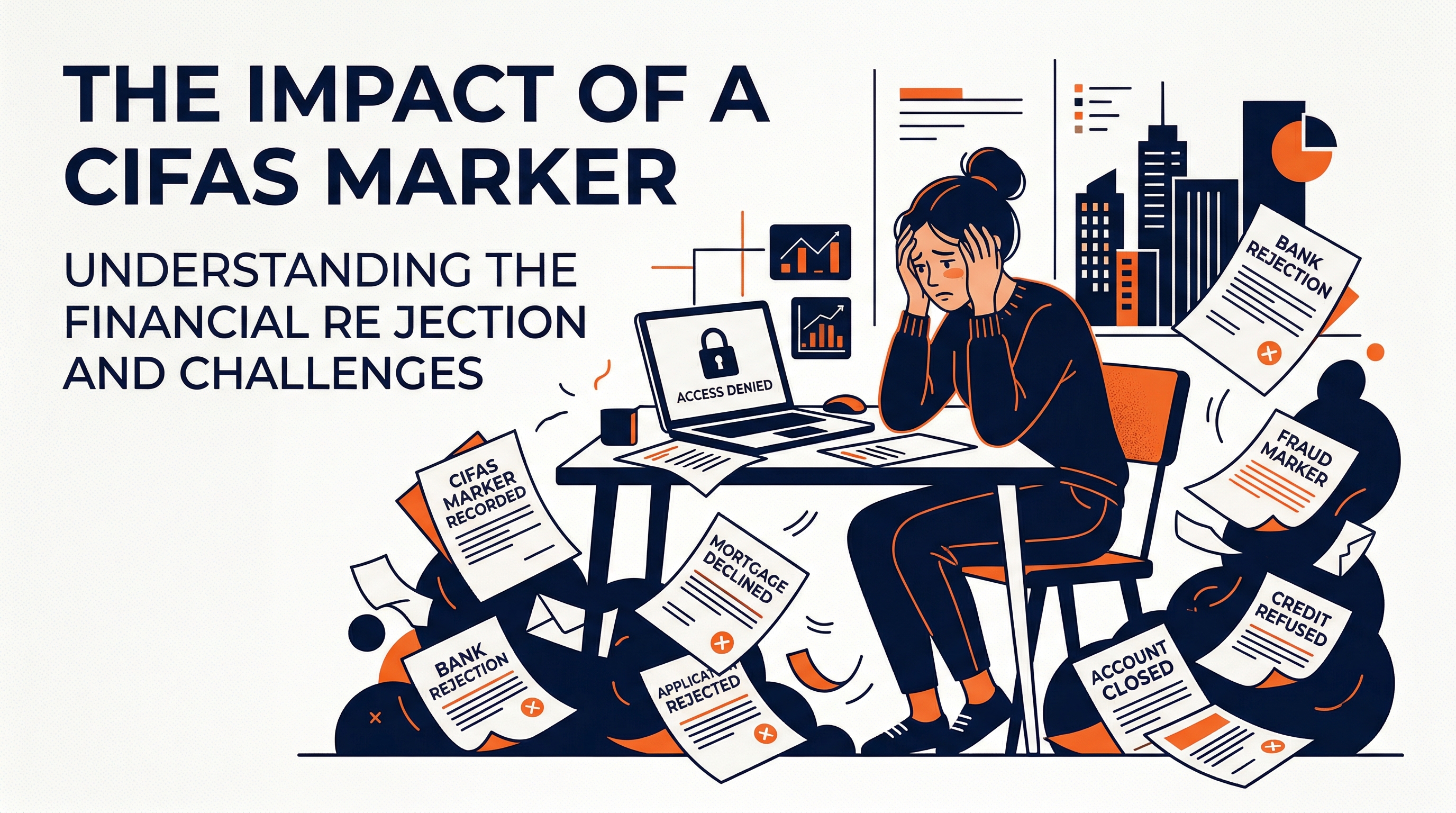
How Halifax files CIFAS markers for influencer passive income schemes
Our client followed a social-media influencer who promoted what looked like a passive income opportunity. The scheme relied on using a Halifax account to receive and move payments in return for a commission, and it was packaged in a way that made it look like a normal online money-making method rather than a criminal arrangement.
By the time Halifax detected the suspicious pattern, the customer had been recruited through perceived legitimacy: follower numbers, polished posts, and the influencer's apparent credibility. The bank appears to have treated the payment activity as enough to justify a Misuse of Facility filing without fully engaging with the way the customer had been drawn into the scheme.
What the CIFAS report showed about this Halifax marker
The report confirmed a Misuse of Facility marker filed by Halifax and reflected a pattern associated with regular payment fraud. It captured the account activity, but it did not show clear evidence that the customer understood the payments were linked to fraud or knowingly agreed to help move illicit money.
That mattered because the difference between deception and dishonesty is the whole case in many social-engineering markers. If the file only showed suspicious transfers and not knowing participation, the foundation for the filing was much weaker than the label suggested.
How we challenged this Halifax influencer CIFAS marker
The complaint set out how the influencer relationship created trust and why the customer believed the opportunity was genuine. It explained the recruitment path, the role of perceived authority online, and the point at which the customer says they realised the arrangement was not what it seemed.
That shifted the focus from raw transaction data to intent and proof. Halifax was asked to show what evidence it had that the account holder was knowingly involved, rather than simply being somebody persuaded by a social-media scheme that had been designed to look legitimate.
How this Halifax influencer CIFAS marker was removed
Halifax removed the marker within four weeks after reviewing the complaint and accepting the social-engineering context. Once that context was restored, the case looked much less like deliberate misuse and much more like a customer being manipulated through a trusted-looking online source.
For similar cases, the lesson is that banks often see the payment trail long before they see the recruitment story. Building that story properly, with messages and chronology, can make a decisive difference when challenging the filing.
Start your Halifax influencer scheme CIFAS marker removal
If a social-media influencer, online mentor, or passive-income account led to a Halifax CIFAS marker, keep the messages, screenshots, payment requests, and timeline showing how you were persuaded to trust the scheme.
Start marker removal and we will help you test whether the bank has evidence of dishonest misuse, or whether it has treated a manipulated customer as if they were a willing participant.
Specialist CIFAS marker removal firm
Your case is different. Our strategy is designed to reflect that.
Professionally drafted complaint documents built around your specific marker, issuer, and evidence. Not a template letter. A four-stage strategy that escalates until the marker is addressed.
More CIFAS marker removal cases
Halifax Building Work Deposit Retained CIFAS Marker Removal
Building work deposit retained
Halifax Crypto Sold via Revolut to Halifax CIFAS Marker Removal
Crypto sold via Revolut transferred to Halifax
Halifax Conductor Unexplained Funds CIFAS Marker Removal
Conductor unexplained funds
Revolut Telegram Job Scam CIFAS Marker Removal
Telegram job scam