Skip to content
Bank2 recurring scenarios

The Bank of London Group CIFAS marker removal

This page is for people trying to work out what a CIFAS warning from The Bank of London Group usually looks like, which scenario patterns keep resurfacing, and how the complaint route changes once the record is in front of you.

What a The Bank of London Group CIFAS marker usually looks like

The local archive is not the whole market, but it is still useful for The Bank of London Group. It shows the kinds of situations that keep surfacing, the marker categories involved, and the points that complaints usually turn on once the record is in view.

The practical question is not whether The Bank of London Group had a reason to be suspicious. It is whether the filing actually met the standard it was supposed to meet when the evidence is tested properly.

0

Published archive cases tied to The Bank of London Group

2

Recurring scenario patterns in the local record

1

Marker categories seen in the archive

Patterns in the The Bank of London Group archive

  • The archive should be read as pattern evidence, not as a verdict on every The Bank of London Group dispute.
  • The useful detail is the scenario, the marker type, and whether the file turns on a transaction pattern, a third party, or a classification problem.
  • Cases often become clearer once the institution's shorthand description is matched against the real-world story behind the marker.

Where complaints against The Bank of London Group often focus

  • The first pressure point is usually evidence of dishonesty rather than evidence that the bank found the activity suspicious.
  • A second pressure point is category choice, especially where the record sounds more dramatic than the underlying conduct.
  • Complaints also improve once the timeline is rebuilt and the customer can show what they actually knew at the time.

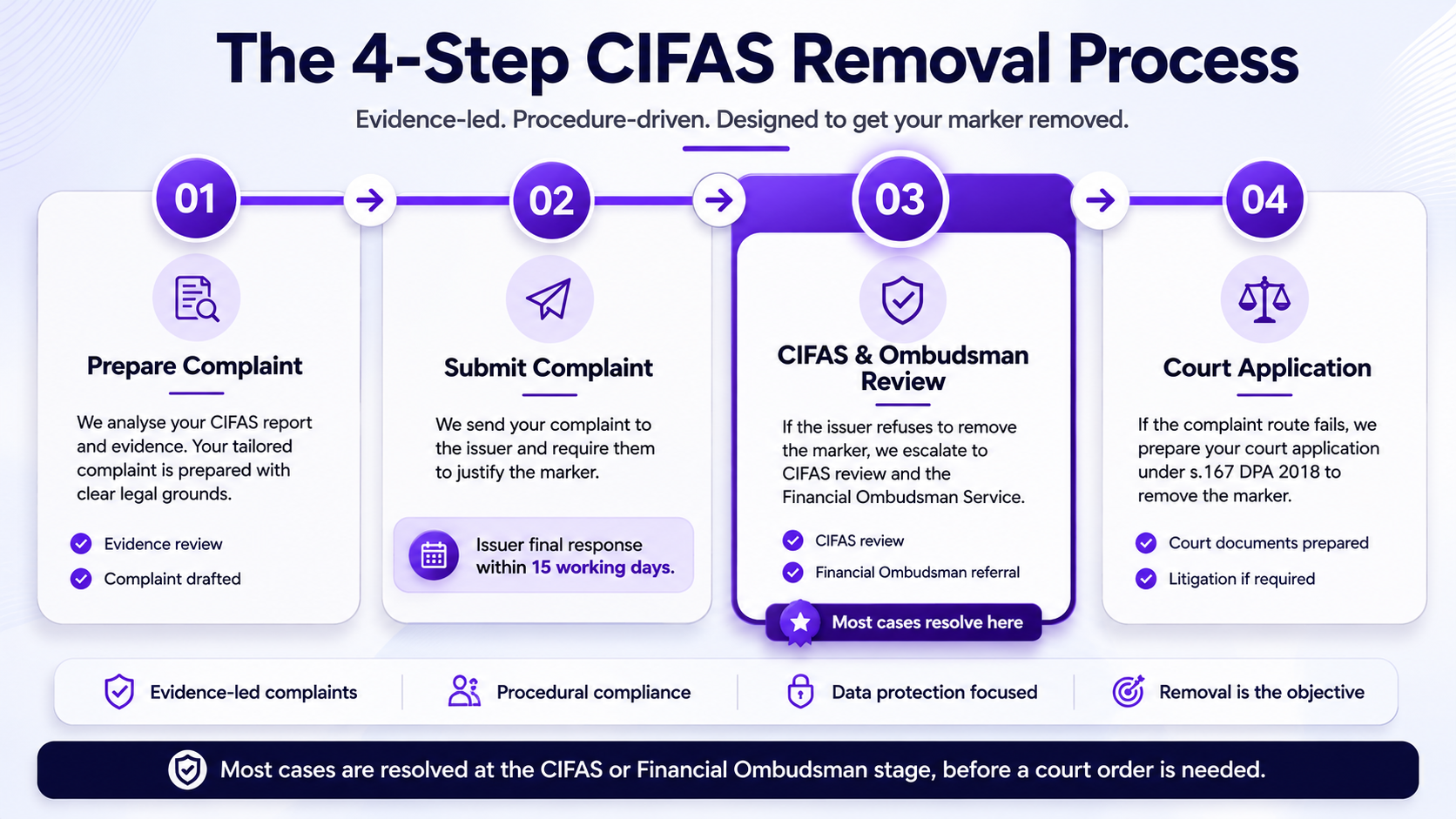
Practical route for a The Bank of London Group marker

Step 01

Get the record

Start with the Cifas entry and the institution's own file. Until the record is in view, the dispute is still mostly guesswork.

Step 02

Challenge the filing

The first complaint goes to the organisation that loaded the warning and should test evidence, category choice, fairness, and data accuracy.

Step 03

Escalate if the route is open

If the institution stands by the marker, the file can move to Cifas review and, where the route is available, to the Ombudsman.

Step 04

Keep court in reserve

Very few disputes need to go that far, but the fact that the route exists changes how the earlier stages are handled.

Institution-specific notes

  • Start with the record and the institution's own file so the complaint is tied to what The Bank of London Group actually recorded.
  • If the firm stands by the marker, keep the chronology and disclosure organised so later escalation stays focused on the filing itself.
  • Where the case touches a business or company relationship, eligible-complainant issues may affect how the Ombudsman route works.

Public data protection contact

The public ICO register lists The Bank of London Group Limited as the relevant organisation for data protection purposes.

Email: dataprotectionofficer@bankoflondon.com

Address: 77 Cornhill, London, London

View the ICO entry

71.3%

Not upheld in the deduped published Ombudsman set

1,313

Unique published Ombudsman decisions in the local dataset

80

Documented removal case studies in the internal record

These figures are context rather than a verdict. In a The Bank of London Group dispute, the real question is whether the filing actually met the evidence standard it was supposed to meet.

The Bank of London Group CIFAS marker FAQ

How do I challenge a The Bank of London Group CIFAS marker?+

Start by getting the Cifas record and the institution's own file, then complain to The Bank of London Group about the filing itself: evidence, category choice, fairness, and data accuracy.

Does a The Bank of London Group marker automatically mean fraud has been proved?+

No. A marker is a fraud-risk record filed by a member organisation, not a court finding. The dispute is whether The Bank of London Group had a proper basis for loading it.

Can I go to the Ombudsman about a The Bank of London Group marker?+

For personal retail-banking and e-money complaints, the Ombudsman route is usually available after a final response or once the complaint deadline has passed. Company-linked and director disputes can raise separate eligible-complainant issues.

What usually makes a The Bank of London Group complaint stronger?+

A better complaint usually ties the scenario back to the record itself: who supplied the information, what the institution says was dishonest, what documents are missing, and whether the filing category actually fits what happened.

Start with the record, then build the complaint properly

If The Bank of London Group filed the marker after payments, an application, or activity you say has been misunderstood, the first job is to test the filing against the record rather than guess at it.